What learners need to know about shock management
Click on the image to enlarge it
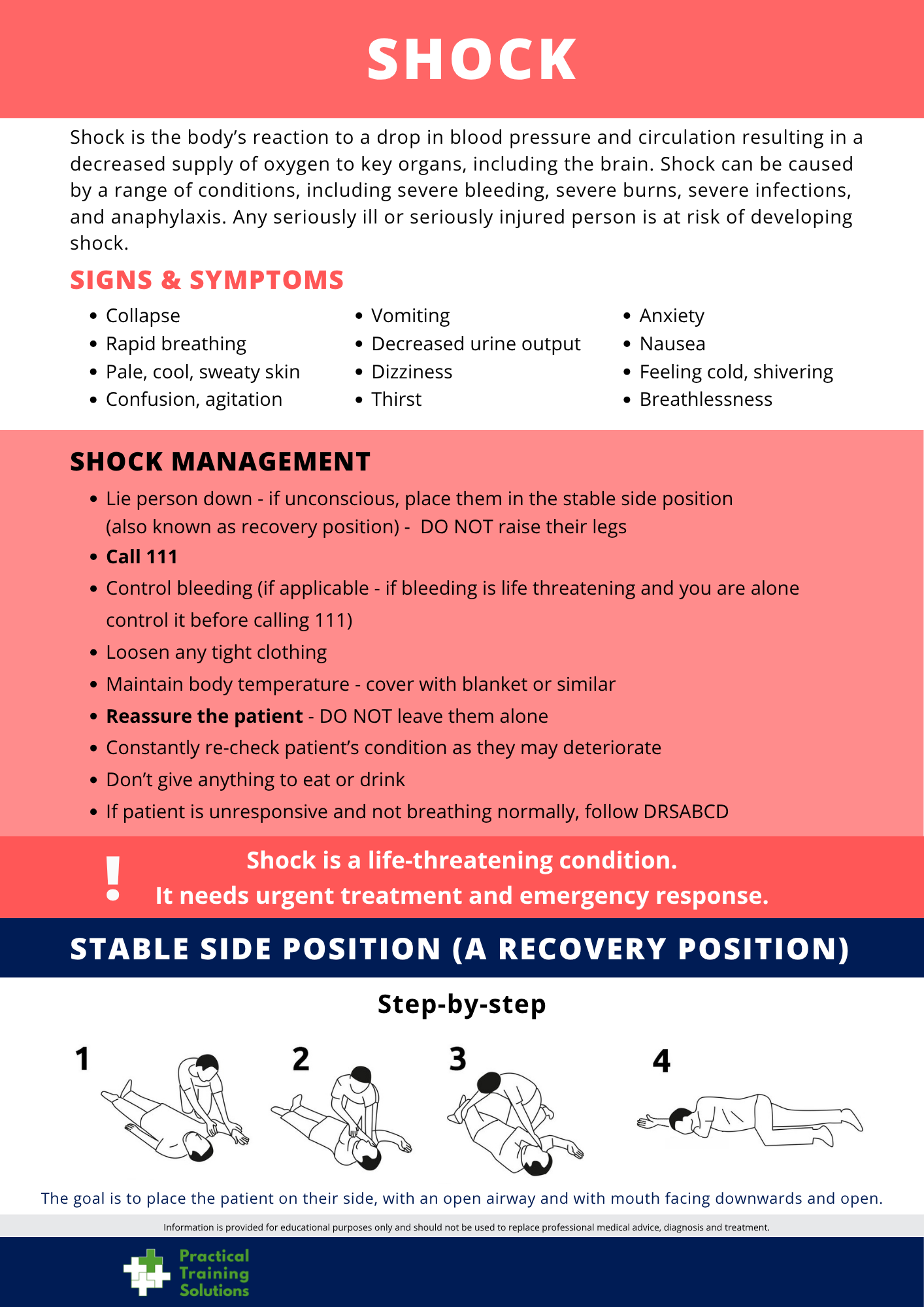
The key steps for shock management are clear and simple. They are shown in the Quick Reference Guide and our shock poster. Ensure you refer to these resources during the practical session, so learners know where to find the information later, including in an emergency.
Remind learners to start with the DRS:
Dangers:
Check the scene is safe for you, the patient, and any bystanders before approaching.
Responsiveness:
- If unresponsive and not breathing normally: Begin CPR
- If unresponsive and breathing normally: Place in the stable side position. Ensure the airway is clear and the mouth is facing downward and open. Check breathing frequently.
- If responsive: Assist the person to lie down on the floor or sit comfortably on the ground. Do not raise the legs. If the person is unable or unwilling to go down to the ground, bring a chair to them.
- Lie pregnant women in the third trimester on the left side.
Seek help: Call 111
Call 111 immediately if you suspect serious illness or injury. Do not wait until you are certain. If life-threatening bleeding is present and you are alone, control the bleeding first, then call 111.
Listen to the text above:
After DRS:
Control Bleeding
If bleeding is present, control it promptly using direct pressure.
Manage Temperature
Cover the person with a blanket to maintain body temperature. If the person feels hot to touch, remove excess clothing instead of adding warmth.
Reassure and Monitor
Stay with the person. Talk to them calmly, tell them help is on the way, and explain what you are doing. Continuously re-check their condition. Reassure them, keep them informed, and re-check their condition because they may deteriorate quickly.
Do Not:
- Do not raise the patient’s legs.
- Do not give the patient anything to eat or drink.
- Do not leave the patient alone.
Listen to the text above:
If learners say they were told to raise a patient’s legs, explain that:
– Raising the legs in shock is no longer routinely recommended because it only gives a brief, unreliable boost in blood flow and does not improve outcomes.
– It can also make breathing harder and be unsafe or uncomfortable for some injuries and medical conditions.
– Modern first aid focuses on lying the person flat (or in their safest, most comfortable position), managing breathing and bleeding, keeping them warm, and calling for help early.
– An unresponsive patient should be placed in the stable side position.
Listen to the text above: